
Orthotics that make everyday movement more comfortable.
When one area of the foot keeps taking too much pressure, the right support can make standing, walking and sport easier to tolerate.
We first check whether orthotics are likely to help. If they are, we choose the simplest option that suits your pain, shoes and daily activity, then add exercises when needed.
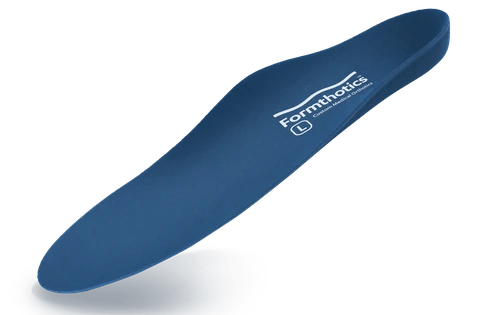
Pain often returns because the same area keeps getting irritated.
Orthotics can be useful when the same pain returns during walking, standing, running, work or while wearing certain shoes.
Your heel hurts when you first stand up
Pain underneath the heel may be strongest with the first few steps in the morning, after sitting or after a long day on your feet.
Work shoes make your foot pain worse
Long standing hours, hard surfaces or footwear with limited support can increase pressure through an already irritated area.
One part of your foot keeps getting overloaded
Pain that keeps returning under the ball of the foot, arch or heel may be linked with where pressure builds up during standing, walking or exercise.
Pain improves with support but returns without it
If supportive shoes or temporary taping make the pain feel better, that is a useful clue during the assessment.

Orthotics work by changing how pressure is spread through your foot.
The aim is not simply to “support an arch”. The right insert can take pressure away from a sore area and make standing, walking or exercise more comfortable. We shape it around your pain, shoes and daily activities.
Take pressure off. Build strength. Return to normal activity.
Orthotics can make movement more comfortable now while exercise and a gradual return to activity build strength for the long term.
Settle
Take enough pressure away from the sore area to make walking, standing or exercise more comfortable.
Strengthen
Build strength in the foot, calf, knee or hip when weakness is adding to the problem.
Return
Gradually return to longer walking, work demands, running, gym training or sport without repeatedly flaring the same area.
Orthotics can help with several foot and leg problems made worse by pressure.
They are most likely to help when certain shoes, long periods on your feet or repeated activity keep irritating the same area—and support makes it feel better.
Heel and arch pain
Support may help selected patients when standing, walking or footwear repeatedly irritates the heel.
→Achilles and calf pain
A small heel raise or supportive insert may help when walking repeatedly strains the calf or Achilles tendon.
→Ball-of-foot pain
Cushioning or a pressure-relief area may help when one spot under the front of the foot stays sore during walking.
Ankle and foot pain
Support may be useful alongside calf strengthening and balance exercises when shoes or foot position are adding to the problem.
→Selected knee pain
For some types of knee pain, changing shoe support may be useful alongside a broader exercise plan.
→Long standing and walking demands
Support may help when long hours at work or repeated walking keep making the foot or heel sore.
Orthotics can help when the right problem is being treated.
Orthotics are most useful when standing, walking, sport or certain shoes keep irritating the same area. We check whether temporary support changes your pain before recommending an insert.
Heel pain on your first steps
Orthotics can take pressure away from a sore heel, especially when getting out of bed, standing for long periods or walking keeps setting it off.
Painful flat or high-arched feet
The right shape and cushioning can move pressure away from a sore spot. Having flat or high arches by itself does not mean you need orthotics.
Some knee or Achilles pain
Support may help when shoes or foot position are adding strain to the knee or Achilles. It should be used with strengthening and a gradual return to activity.
How orthotics compared in four studies.
Blue shows the result with supportive orthotics. Grey shows a basic flat insert or shoes without extra support. A short explanation under each graph tells you what the numbers mean.
Less first-step pain
Bishop C, Thewlis D, Hillier S. BMC Musculoskeletal Disorders. 2018;19:222.
More people felt improved
Collins N et al. BMJ. 2008;337:a1735.
Lower pain after 8 weeks
Yurt Y, Şener G, Yakut Y. Eur J Phys Rehabil Med. 2019;55(1):95–102.
Pain and function improved
Burns J, Crosbie J, Ouvrier R, Hunt A. J Am Podiatr Med Assoc. 2006;96(3):205–211.
Orthotics are more likely to help when:
We look for a clear, practical reason before recommending them.
- Taping, supportive shoes or a temporary insert makes the pain feel better.
- The same heel, arch or ball-of-foot area keeps becoming sore.
- The insert fits comfortably inside the shoes you use for work, walking or sport.
- We can review comfort and check whether everyday activity is becoming easier.
These numbers are averages from four studies, so they do not promise the same result for everyone. Research results differ between conditions and people. Orthotics usually work best with suitable shoes, rehabilitation and sensible changes to activity. Sources include Bishop et al. 2018, Collins et al. 2008, Yurt et al. 2019, Burns et al. 2006 and the 2023 heel pain treatment guideline.
We match orthotics to your pain, shoes and daily activity.
We find the sore area, check what keeps irritating it and try support inside your usual shoes before deciding what you need.
Understand the pain
We review where it hurts, how it started, what activities aggravate it and what you need to return to.
Check how you move
We check how your foot and ankle move, how strong and steady you are, and what happens when you stand and walk.
Select the support
If an insert is likely to help, we choose the simplest option that fits your shoes and takes pressure away from the painful area.
Build strength
Exercises and activity are increased gradually so the insert supports recovery without replacing strength.
Orthotics from $80.
The cost depends on the type of support and how much adjustment it needs. Assessment or appointment fees may also apply.
For eligible ACC injury claims, orthotics may be considered when they are needed as part of recovery. Funding depends on ACC requirements and the individual claim.
Before getting orthotics.
The most common questions we hear before an orthotic assessment.
No. Foot shape alone does not mean you need orthotics. We look at where it hurts, which shoes and activities make it worse, and whether temporary support makes it feel better.
They can help some types of heel pain by taking pressure away from the sore area while it settles. They usually work best with suitable shoes, temporary changes to activity and a rehabilitation plan—not as the only treatment.
No. We use ready-made, adjusted and custom-made inserts. The best option is the simplest one that fits your shoes and takes enough pressure away from the painful area.
Usually not. Orthotics can make movement more comfortable, but strength and confidence with activity still need to improve when weakness is part of the problem.
Sometimes. They may help when shoes or foot position are adding strain to the knee. Because knee pain has many causes, we assess it first rather than recommending orthotics to everyone.
Orthotics may be considered for eligible ACC injury claims when they are needed as part of recovery. Funding and approval depend on ACC requirements and the individual claim.
No. Book an assessment first. We will check the problem and explain whether orthotics are likely to help and what type of support would suit your pain and shoes.
If the same pain keeps returning, change what is irritating it.
Start with an orthotics assessment. We will check the sore area, your shoes and how you walk, then show you whether support can take pressure away from it.